Stop Cooking Tiny Meals: The Case for Cooking Like You Mean It
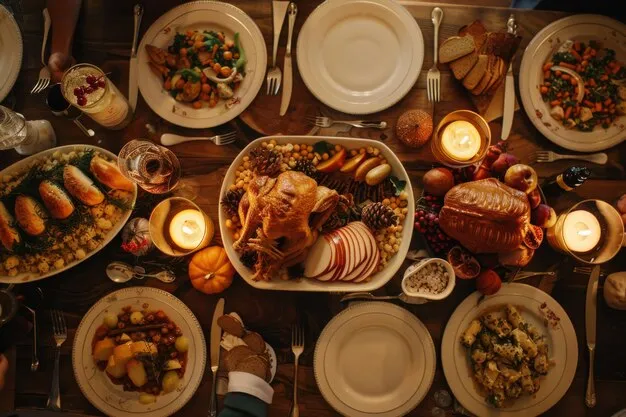
Photo: overloaded dinner table with large shared dishes roasted meats family style, via img.freepik.com
There's a certain kind of cooking that gets all the attention on social media: three bites of something artful, arranged on a plate the size of a hubcap, photographed before the sauce even settles. It's beautiful. It's also not dinner.
Here at Full Plate Culinary, we believe in a different kind of math. Not the math of portion control and tasting menus, but the math of abundance—where the goal is a table so loaded nobody leaves hungry, and a grocery bill that doesn't require a stiff drink afterward.
The Hidden Cost of Fussy Cooking
Let's talk numbers, because fussy cooking is quietly expensive.
Take a trendy bistro-style dinner: a small portion of short rib, a smear of purée, microgreens. At home, that translates to buying expensive cuts in small quantities, using half of what you purchase, and firing up four burners for one plate. Your cost per serving climbs. Your leftovers? Nonexistent.
Now flip it. Buy a 4-pound chuck roast at $6.99 a pound (about $28) and braise it with onions, carrots, and a bottle of cheap red wine. That's six generous servings at roughly $4.70 each—and it tastes better on day two. Compare that to the $22 fast-casual steak bowl many of us grab twice a week, and you're saving north of $100 a month without sacrificing a thing except the wait in line.
Big Batches Are a Flavor Strategy, Not Just a Budget One
Here's what the small-plate crowd doesn't advertise: most food gets better when you cook it big.
- Braised meats deepen overnight as the fat reabsorbs and the spices mingle.
- Chili, gumbo, and pork ragù all improve after a night in the fridge.
- A whole roasted chicken yields dinner tonight, chicken salad tomorrow, and a pot of stock that makes the next soup taste like it took all day.
Cooking small means every meal starts from zero. Cooking big means every meal starts from a head start.
Three Full-Plate Formulas That Prove the Point
1. The One-Pot Feast
A jambalaya, a big dutch oven of chicken and sausage gumbo, or a paella-style rice with whatever's on sale. One vessel, eight servings, maybe $2.50 a plate. The rice and stock do the heavy lifting; the andouille and shrimp do the bragging.
2. The Shareable Spread
Think Middle Eastern–style mezze night or a Southern Sunday table: a big pot of red beans and rice, skillet cornbread, braised greens, sliced tomatoes. Nobody measures portions. Everybody eats until they're done. Feed four people handsomely for under $20 total.
3. The Big-Batch Roast
A pork shoulder, dry-rubbed and roasted low and slow on Saturday, becomes carnitas tacos, Cuban sandwiches, and loaded nachos across the week. At roughly $1.75 per serving, it beats every drive-thru in town.
Abundance Is a Mindset
Somewhere along the way, American home cooking got talked into apologizing for itself—shrinking portions, fussy plating, cooking for one in nine different pans. We're calling nonsense. The best meals in this country have always been generous ones: church potlucks, tailgates, Thanksgiving, your aunt's Thanksgiving second table.
Generosity scales down beautifully, too. A full plate for two on a Tuesday is still a full plate. Cook like you mean it, buy the big cut, fill the pot, and let the leftovers prove the point.
Your wallet will notice. So will everyone at your table.