Turn the Burner Up: Why Your Kitchen Isn't Hot Enough Yet
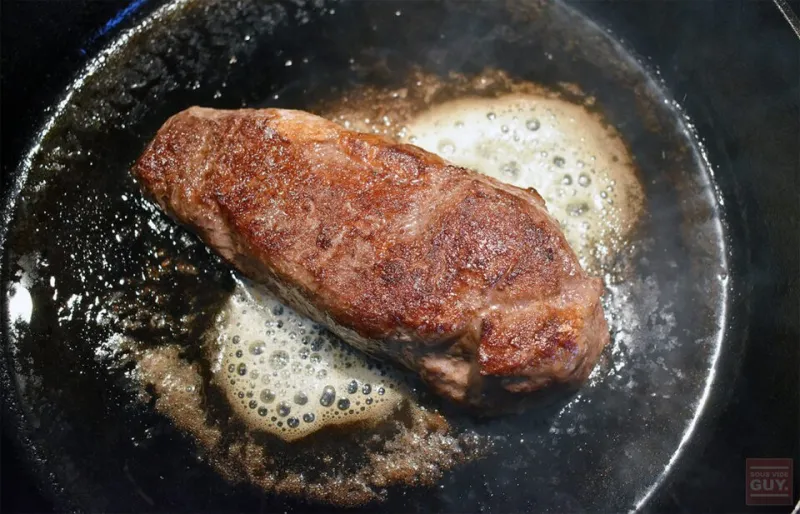
Photo: sousvideguy, CC BY 2.0, via Wikimedia Commons
There's a moment in every steakhouse kitchen that never makes it onto the menu: the sound. That aggressive hiss when cold meat hits screaming-hot steel. If your home kitchen has never made that sound, this article is for you.
Somewhere along the way, American home cooks got trained to be timid with temperature. We preheat for five minutes instead of fifteen. We crowd the pan. We flip too early and poke too often. Then we wonder why the pork chop we made at home tastes like the pork chop from the cafeteria, while the one at the steakhouse tastes like a small miracle.
The difference isn't talent. It's heat. Real heat — the kind that makes your smoke detector nervous. And it's the most underused tool in your kitchen.
The Maillard Reaction, Minus the Lecture
You've heard the term. Here's what it actually means: when proteins and sugars in food get hot enough (north of about 300°F on the surface), they break apart and recombine into hundreds of new flavor compounds. Browns deepen. Aromas bloom. That golden crust on a burger isn't "cooked" — it's transformed.
The catch? The Maillard reaction only runs fast and furious at high temperatures. At medium, your food spends its time slowly steaming in its own juices instead of browning. That's why a pale, gray burger and a mahogany smash burger can come from the same beef. One met the heat head-on. The other negotiated with it.
Big flavor is a chemistry problem, and the answer is always the same: make the surface hotter, faster.
The Three Mistakes Almost Everybody Makes
1. You didn't actually preheat. Your pan being warm and your pan being ready are different things. Cast iron needs a solid 8–10 minutes over medium-high before it's truly hot. Flick a drop of water on it — if it skitters and evaporates instantly, you're in business.
2. You crowded the pan. Every piece of food you add drops the surface temperature and releases moisture. Ten pieces in a 12-inch skillet means you're boiling, not searing. Give everything room, or work in batches. Yes, batches. It's worth it.
3. You kept moving the food. A steak needs 60–90 uninterrupted seconds to build a crust. If you're nudging it around like it's a chess piece, you're tearing the crust before it forms. Put it down. Walk away. Trust the process.
The Screaming Skillet: Your Steak and Chop Playbook
Cast iron is the workhorse here because it holds heat like a griddle holds grudge. Get it ripping hot, add a high-smoke-point oil (avocado, grapeseed, or good old canola), then:
- Pat the meat bone dry. Moisture is the enemy of browning. Paper towel it like you mean it.
- Salt just before cooking. Salting too far ahead pulls moisture to the surface unless you give it 40+ minutes to reabsorb.
- Sear hard, 60–90 seconds a side, then reduce the heat or finish in a 400°F oven to hit your target temp.
- Rest it. Five minutes minimum. Cutting early is a crime against juicy things.
The result is a crust you can hear when you bite it — the kind that makes a ribeye dinner feel like an event instead of a chore.
Smash Burgers: High Heat as a Party Trick
The smash burger is high-heat cooking with zero pretension. A baseball-sized ball of 80/20 chuck, slammed flat on a scorching griddle or cast-iron pan with a sturdy spatula, achieves something nothing else can: maximum surface area, maximum contact, maximum crust.
The rules are simple. Pan hot enough that the meat sizzles violently on contact. Smash within the first 10 seconds, then never touch it again for two full minutes. Scrape up the crispy lace edges, flip once, cheese immediately, stack on a soft potato roll. Two patties minimum — this is Full Plate, after all.
The Broiler: The Most Neglected Appliance in America
Open your oven. See that heating element at the top? Most people use it twice a year. That's a shame, because the broiler is a downward-facing grill that requires zero equipment and zero propane.
Broiler-friendly moves:
- Charred vegetables. Halved Brussels sprouts, broccoli florets, or thick-cut onions tossed in oil, broiled 6 inches from the element until blistered and blackened at the edges. Ten minutes, tops.
- Crispy chicken thighs. Skin-side up on a rack, broiled until the skin shatters. Dark meat forgives you for the high heat.
- Melting cheese on anything — chili, French onion soup, a slab of sourdough with sharp cheddar.
Keep the door cracked, watch it like a hawk, and pull everything one minute before you think it's done. The broiler doesn't do second chances.
The Grill, Earned
Grilling gets its own mythology, but the principle is the same: dry heat, high temperature, real contact. Two zones — a hot side for searing, a cooler side for finishing — is the entire secret. Sear the steak over the coals, move it away, close the lid, let carryover heat finish the job. For vegetables, don't fear the char. A little black on a bell pepper or a peach isn't a mistake. It's the point.
Turn It Up Already
Here's the thing about high heat: it rewards confidence and punishes hesitation. It's the opposite of fussy cooking. No precise knife work, no delicate sauces — just a hot surface, dry food, and the discipline to leave things alone.
So preheat longer than feels reasonable. Open a window. Let the detector chirp once and forgive yourself. The plate you pull off that pan — deeply browned, crackling at the edges, still sizzling when it lands — is the kind of dinner that fills a plate and empties it.
Full plates don't come from timid burners. Turn it up.