Recipes for Four Are Really Recipes for Two: The Case for Cooking Double

Photo: Wewunmaster, CC BY-SA 4.0, via Wikimedia Commons
Let's have an honest conversation about the phrase "serves four."
Somewhere along the way, cookbook publishers and recipe developers decided that a pound of pasta, two chicken breasts, and a handful of vegetables constitutes dinner for a family of four. Maybe in a universe where everyone also eats a full appetizer, a salad course, and a bread basket, that math works. In your actual kitchen on an actual Tuesday, it doesn't. Teenagers come home from practice starving. Grown adults with real appetites take one look at a dainty portion and quietly start rummaging for crackers.
Here at Full Plate Culinary, we think it's time to stop pretending. Most recipes written for four are, in practice, recipes for two comfortable eaters or three polite ones. And the fix isn't a better recipe — it's a better philosophy: always cook more than the recipe says.
The Myth of the Perfectly Portioned Recipe
There's a certain tidy-mindedness in American home cooking that treats a recipe like a contract. It says four servings, you make four servings, you eat four servings, done. Anything more feels wasteful or indulgent, like you've broken some dietary rule.
But think about what actually happens at your table. Someone takes a smaller helping because they're "not that hungry" (they will be, in forty minutes). Someone else loves the dish and wants more but hesitates because there's just barely enough for everyone to get one serving. Nobody goes back for seconds because going back for seconds means someone else goes without. That's not a dinner — that's a negotiation.
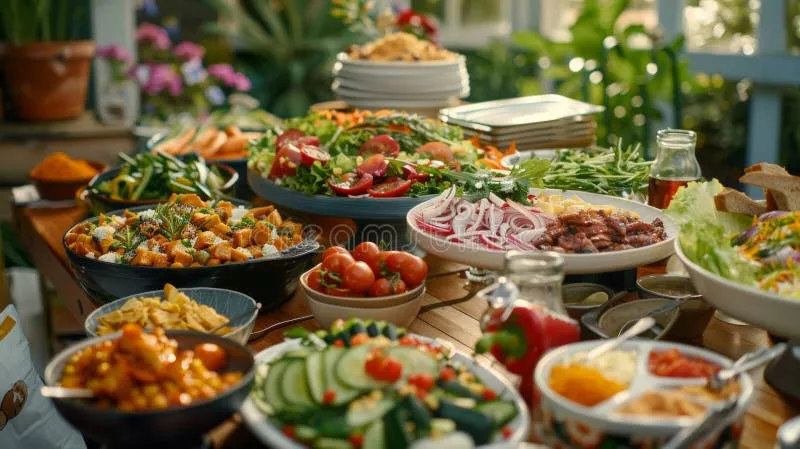
Cooking extra changes the entire emotional temperature of the meal. When there's visibly more than enough, people relax. They serve themselves generously. They offer you some of theirs. The pot on the stove says "stay awhile," and that's a message worth sending.
Scaling Up Without Wrecking Dinner
Now, before you triple everything and create a butter flood, some practical ground rules. Not every ingredient scales linearly, and knowing which ones don't is the difference between a bigger batch and a bigger mistake.
Salt and spices: go easy, then adjust. If you double a recipe, start with 1.5 times the salt and dried spices, taste, and build from there. Seasonings concentrate differently in larger volumes, and you can always add more. You cannot un-salt a pot of chili.
Liquids don't always double. In a braised dish or a soup, doubling the liquid can leave you with something watery, because evaporation doesn't scale with volume. A bigger pot of braise reduces more slowly. Start with about 1.75 times the liquid and let the dish tell you what it needs.
Cooking times stretch. A deeper casserole or a fuller Dutch oven takes longer to heat through. Give it extra time and trust a thermometer, not the clock.
Some dishes hate doubling. Delicate pan sauces, single-layer cakes, and anything that depends on a screaming-hot crowded-but-not-too-crowded skillet can get finicky. For those, cook in two batches instead of one giant batch. Same result, less heartbreak.
And one more thing: your equipment matters. If you're scaling a soup or a braise, you need a pot that can actually hold it. This is the argument for owning one genuinely large Dutch oven. It will pay for itself in leftovers.
Dishes That Actually Get Better on Day Two
The second-helpings doctrine has a beautiful side effect: extra food becomes tomorrow's lunch or Thursday's dinner with zero extra effort. And some dishes don't just survive the overnight — they improve.
Braised anything. Short ribs, pork shoulder, chicken thighs in sauce. The flavors meld, the fat re-settles, and reheated braise often beats fresh-off-the-stove braise.
Chili, stew, and bean dishes. Beans and lentils are little sponges for seasoning overnight. Day-two chili is the whole point of chili.
Lasagna and baked pastas. They slice cleaner, hold their shape, and the sauce has soaked into every noodle.
Curries and saucy stir-fry bases. Sauce-forward dishes reheat beautifully, especially over freshly cooked rice, which takes twelve minutes and makes the whole thing feel new.
Soups. Almost universally. The exception list is short: anything with cream or pasta in it, which you should store separately and add when reheating.
Dishes to be more careful with: anything crispy (fried chicken, roasted potatoes — reheat them hot and dry, never steamed in a microwave), delicate fish, and dressed salads. Cook extra of the things that hold up; make just enough of the things that don't.
The Psychology of an Abundant Table
There's a deeper reason this philosophy matters, and it isn't just logistics. When you cook exactly enough — no more, no less — you turn your dinner table into a place of quiet scarcity. Portions get policed, even if nobody says so. Guests take less than they want. Kids learn to grab first and ask questions later.
Abundance flips that script. A pot of soup with two ladles left over tells everyone at the table the same thing: take what you want, there's more. It's hospitality in its most practical form, and it costs you maybe ten extra minutes of prep and a few dollars of ingredients.
It also buys you freedom later. That extra portion is a lunch you didn't have to think about. It's the dinner you didn't order takeout to replace. It's the neighbor's meal when they're having a rough week. Cooking more than you need is, honestly, one of the most generous things you can do for your future self.
Start This Week
You don't need to double everything tomorrow. Start with one dish a week — a soup, a braise, a big pan of baked ziti — and deliberately make half again as much as the recipe calls for. Watch what happens at the table. Watch how fast the second helpings disappear, and how much better everyone eats when the food says yes before anyone has to ask.
The recipe says it serves four. You know better. Cook like you mean it, and let the pot prove you right.